As an international wholesale buyer, sourcing furniture from Indonesia offers a blend of design innovation and legal assurance. The country’s commitment to quality control in furniture export ensures that each piece meets stringent standards, providing satisfaction for importers, retailers, and hospitality procurement professionals worldwide.
Understanding Indonesia’s SVLK Certification
Indonesia’s SVLK (Sistem Verifikasi Legalitas Kayu) certification is a cornerstone of the country’s furniture export industry, ensuring that all timber products are legally harvested and traceable. This mandatory Timber Legality Assurance System requires exporters to ship consignments with a V-Legal Document, which acts as proof of legal timber sourcing. The certification is valid for three years, with annual surveillance to maintain compliance. As part of Indonesia’s FLEGT partnership with the EU, SVLK supports due diligence under the EU Deforestation Regulation and the US Lacey Act. While SVLK is not the same as FSC certification, it provides a robust legality baseline that some factories choose to supplement with FSC for sustainability. Buyers can learn more about the intricacies of SVLK by visiting our comprehensive guide.
Key Materials Used in Indonesian Furniture
Indonesian furniture is renowned for its use of high-quality materials, which are essential for both aesthetics and durability. Common materials include:
- Solid Teak: Sourced predominantly from Jepara, Central Java, known for its strength and weather resistance.
- Reclaimed/Recycled Teak: An eco-friendly option that repurposes existing wood.
- Mahogany: Valued for its rich color and fine grain.
- Suar/Acacia: Popular for live-edge designs, offering a natural and rustic look.
- Rattan: Both natural and synthetic (PE all-weather) varieties are used, with rattan being a sustainable material.
- Water Hyacinth and Seagrass: Ideal for woven furniture pieces.
- Genuine Leather and Stone/Terrazzo: Used for premium finishes and designs.
These materials are selected based on durability, availability, and suitability for various design requirements, ensuring that the final product meets international quality standards.
Finishing Techniques and Quality Control
The finishing process is critical in enhancing the aesthetic and functional qualities of Indonesian furniture. Techniques such as sanding, staining, and sealing are meticulously applied to achieve desired textures and colors. Quality control at this stage ensures that the finish is durable and resistant to environmental factors. Inspection teams conduct thorough checks for consistency in color, texture, and application, ensuring each piece meets the high standards expected by international buyers. Specialized finishes, like distressed or weathered effects, are available to cater to diverse market preferences. Our factories are equipped with advanced facilities to execute these techniques, ensuring that each piece not only looks exceptional but is also built to last.
Packing and Shipping Standards
Proper packing is vital to ensure furniture arrives in perfect condition. Indonesian manufacturers adhere to international packing standards, using a combination of bubble wrap, foam, and sturdy cartons to protect each item. For larger pieces, wooden crates may be used to provide additional security. Shipping marks and labels are clearly printed to facilitate smooth customs clearance. Our logistics team works closely with shipping partners to ensure timely and efficient delivery, minimizing the risk of damage during transit. Buyers can select from various shipping options, including full container loads (FCL) and less than container loads (LCL), depending on their order size and urgency.
Container Loading Capacities
Understanding container capacities is crucial for optimizing shipping costs and logistics. The usable loading capacity for furniture is approximately:
| Container Type | Volume (CBM) |
|---|---|
| 20ft | 28 CBM |
| 40ft | 58 CBM |
| 40HQ | 68 CBM |
Bulky upholstered or woven pieces often reach volume limits before weight limits, while dense knock-down items may hit weight limits first. Efficient loading strategies are essential to maximize space and reduce costs. For more details on optimizing your shipment, visit our shipping process guide.
Minimum Order Quantities (MOQs)
Indonesian furniture manufacturers typically require minimum order quantities (MOQs) to ensure production efficiency. The standard MOQs are:
- Solid-Wood Furniture: 5-20 pieces per item.
- Woven/Rattan Furniture: 10-30 pieces per model/color.
The minimum order is usually one 20ft container, approximately 25-28 CBM. Mixed-model and mixed-material containers are common, provided each item meets its MOQ and the total load meets the minimum CBM requirement. This flexibility allows buyers to customize their orders while maintaining cost-effectiveness.
Lead Times and Shipping Terms
Efficient production and shipping schedules are vital for timely furniture delivery. Production lead times typically range from 30-60 days, depending on the order’s size and complexity. Sea-freight transit times vary, approximately 3-5 weeks to the US, EU, and Australia, with shorter durations to the Middle East and Asia. Main Indonesian export seaports include Tanjung Perak (Surabaya), Tanjung Emas (Semarang), and Benoa (Bali). Common Incoterms include FOB, CFR/CNF, and CIF, with FOB being the most prevalent, where the seller handles export clearance and loading at the port, and the buyer arranges sea freight and insurance. For comprehensive insights into shipping logistics, explore our shipping process information.
Payment Terms and Pricing Strategies
Payment terms are typically negotiated to suit both parties’ needs. A deposit of approximately 30-50% via T/T (bank transfer) is standard to commence production, with the balance due against a copy of the Bill of Lading (B/L). Terms can be adjusted for repeat buyers to foster long-term relationships. Pricing is calculated based on material, grade, specification, finish, volume, and Incoterm. As prices vary, buyers are encouraged to request a quote for specific details. Our dedicated team is ready to assist with tailored pricing strategies to meet your business requirements.
Export Hubs and Market Reach
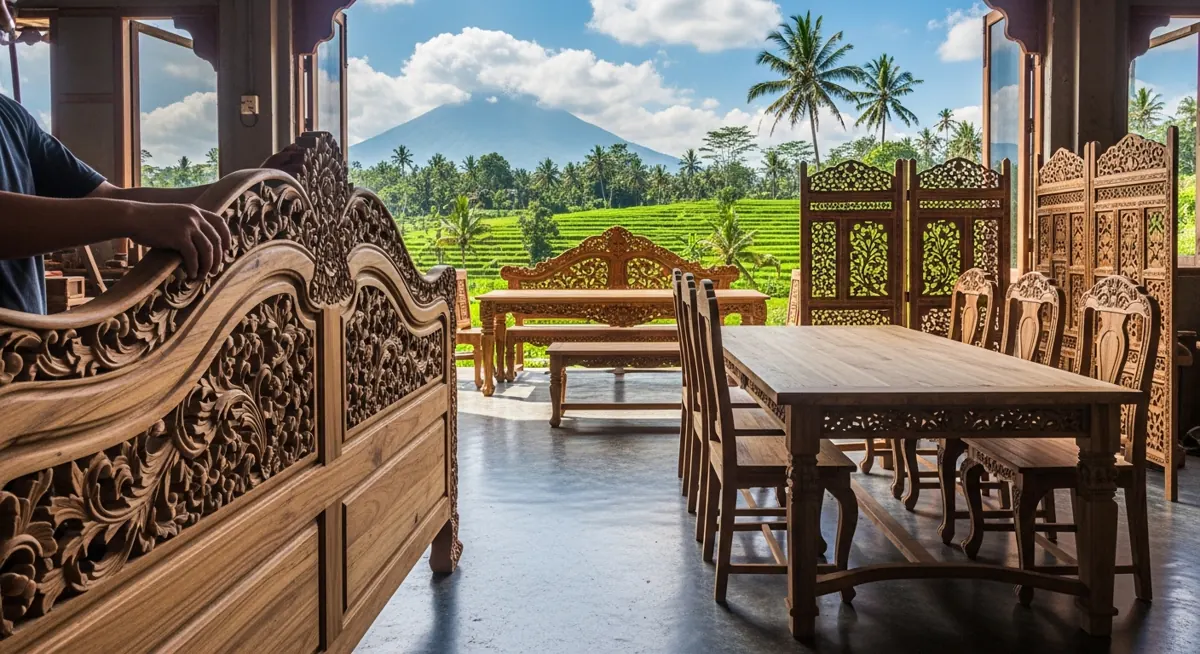
Indonesia’s furniture export industry is centered around key hubs such as Jepara and Bali. Jepara is renowned for its historic teak and carved furniture, while Bali focuses on design-led outdoor and contemporary pieces. Indonesian manufacturers offer OEM/ODM services, producing to buyers’ specifications and providing pre-production samples. Private-label and branding options are also available. Major export markets include the US, EU, Australia, the Middle East, and Japan, underscoring Indonesia’s global reach and appeal. For more information on sourcing options, visit our Bali furniture sourcing page.
For further inquiries and to request a quote, please contact us. Our team is ready to support your sourcing needs and provide detailed RFQ assistance.